
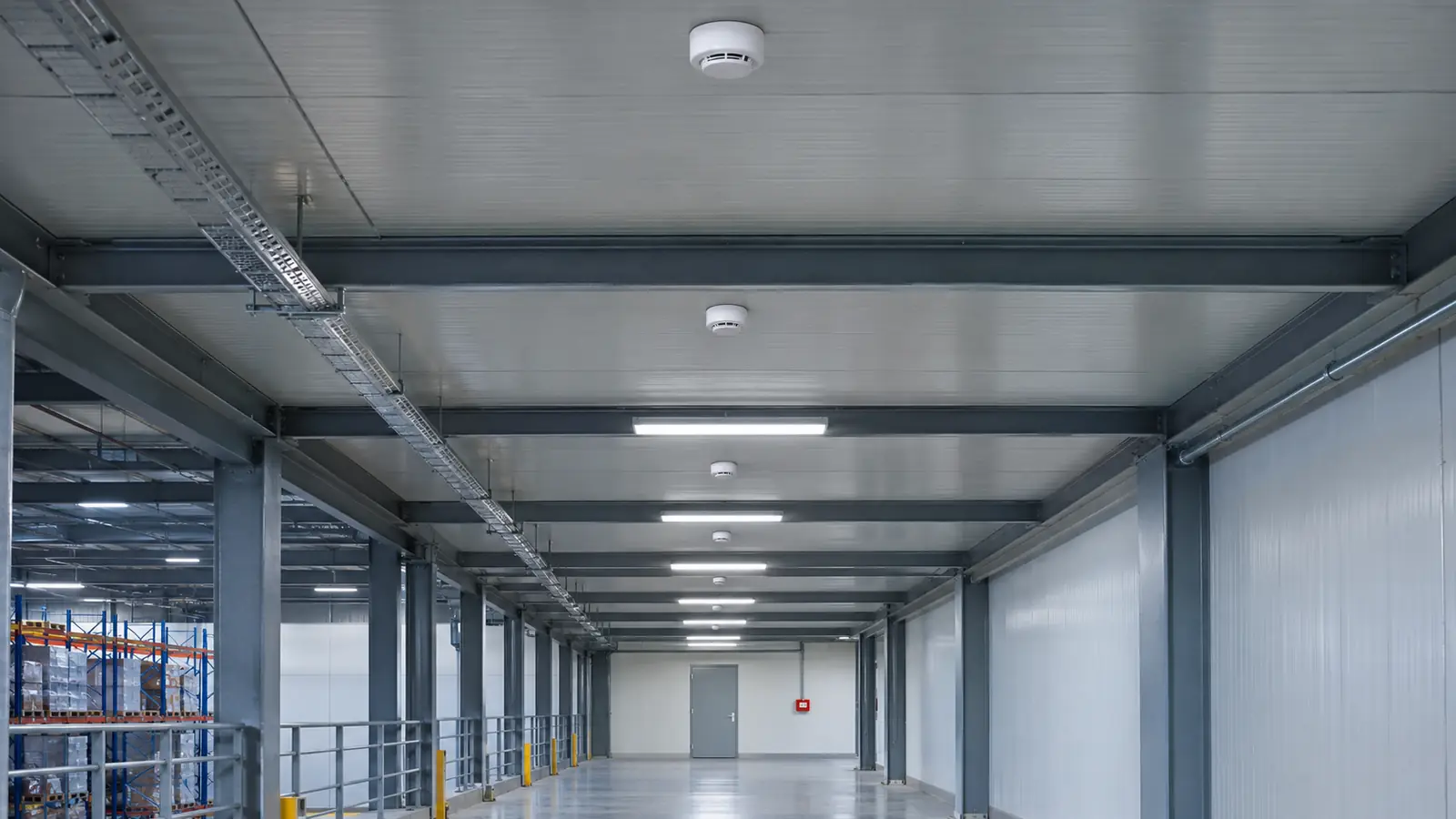
Fire safety: what an owner should know before installing a system.
Detection, alarm, safety actions: this guide explains to an owner or an operator what each part of the system does, what changes from one building to another and what to ask an installer.
What happens when a fire starts
Picture a stockroom, one evening, after closing time. A fire is starting to smoulder in some packaging. Nobody is there to see it: a detector picks up the smoke and passes the information to the control panel. The panel shows the zone concerned and sets off the alarm. Depending on what was planned at the design stage, doors close to hold back the smoke, the ventilation stops and smoke extraction is activated.
This sequence brings together three functions: detecting, alerting, making the building safe. They are designed together, but are not always all present; their extent depends on the building, on how it is occupied and on the requirements that apply to the project. An owner should know which ones the site is equipped with. After an incident or an inspection, the useful question is not whether there is an alarm, but what the system does, and in what order.
The parts of the system, one by one
Automatic detectors watch over the premises at all times, including when they are empty. Manual call points, the boxes placed near the exits, allow a witness to raise the alarm without waiting. All of them are connected to the control panel, which receives the information, locates the alert and also reports faults in the installation itself: a disconnected detector or a broken line shows up there.
Downstream, the alarm sounders, sometimes paired with visual signals, warn the occupants. The safety controls act on the building: release of fire doors held open, activation of smoke extraction, shutdown of the ventilation, unlocking of exits. A standby power supply keeps the whole system on watch if the power is cut. That is why the tests cover the complete chain, from the detector to the action it triggers.
The parts and what they do
- Automatic detectors: spot the start of a fire with nobody present
- Manual call points: allow a witness to raise the alarm
- Control panel: receive, locate, report faults
- Alarm sounders and visual signals: warn the occupants
- Safety controls: doors, smoke extraction, ventilation, exits
- Standby power supply: keep the system on watch during a power cut
Store, factory, offices: what changes
In a store, the public does not know the premises. The alarm must be understood as much as heard, hence the value of a sound system able to broadcast an evacuation message. The stockrooms, where goods pile up, call for the same attention as the sales floor. In the Decathlon stores, In All Africa (IN2A) delivered both the fire detection and the evacuation and voice alarm system, along with the rest of the electrical work package.
In a factory, dust, steam, machine noise and the height of the buildings guide the choice of detectors and sounders, so as to detect early without repeated alarms. In All Africa (IN2A) installed the fire detection of the new Fenie Brossette manufacturing unit in Tit Mellil (client certificate dated 2010). In offices, the risk comes rather from refits: a partition that has been moved can leave a room without a detector.
What the operator has to keep track of over time
The maintenance company checks the detectors, the control panel, the sounders, the safety controls and the standby power supply, because a system on watch does not show its faults. The operator, for its part, lives with the system every day. First of all, someone on site must know how to read the panel: tell an alarm from a fault, identify the zone, know whom to call. A fault that has been displayed for a long time and that nobody looks at any more is the most common sign of a system that no longer protects as it should.
Building works are the other fragile moment. To avoid the system being set off during works, zones are sometimes taken out of service; you need to make sure that they are put back into service afterwards. Keeping a logbook that records the tests, the alarms, the faults and the call-outs lets both the operator and the maintenance company know what state the installation is really in.
For the operator to keep track of
- A designated person able to read the control panel
- Faults displayed, reported to the maintenance company without delay
- Zones taken out of service during works, then put back into service
- Changes to partitions, storage or the use of the rooms
- A logbook of tests, alarms and call-outs
- Exits and manual call points kept clear and visible
What to ask an installer
A fire safety quote is judged less on the number of detectors than on what surrounds them. Who carries out the design, and from which drawings? Which safety actions are planned, and who connects the equipment concerned: doors, ventilation, smoke extraction? How are the tests carried out and recorded? What does the documentation handed over at the end contain? Who then provides maintenance and repairs?
The question of interfaces deserves particular attention, because the safety actions operate equipment installed by other trades. When the same company carries out the electrical works and the detection, a single party is responsible for these links. That was the case for the EHTP conference hall, in Casablanca, where In All Africa (IN2A) delivered the electrical works, the light fittings and the fire detection (client certificate dated 2013).
Questions to ask
- Who carries out the design and the layout of the detectors?
- Which safety actions does the system control?
- Who connects the doors, the ventilation and the smoke extraction to the system?
- How are the tests carried out and recorded?
- Which drawings and manuals are handed over at the end?
- Who trains the site staff to read the panel?
- Who provides maintenance and repairs?
A model of principle: typical equipment, not the mock-up of a particular installation.
Your questions
01Are manual call points enough without automatic detection?
A manual call point is only of use if someone is there to operate it. Automatic detection also watches over empty premises, at night or in stockrooms. What is required depends on the building and on the requirements that apply to the project; the specification or the inspection body sets this out.
02Where do false alarms come from?
Most often from dust, steam, works in progress or a detector that is ill-suited to the room or clogged with dirt. Disabling the detector deals with the noise, not the problem: it is better to look for the cause, then clean the device, move it or replace it with a model that suits the room.
03Does the system work during a power cut?
Yes, for a limited time. The panel has a standby power supply, generally batteries, which takes over when the power is cut. These batteries age: their condition is one of the points checked during maintenance, as is the reporting of the power supply fault on the panel.
Read next
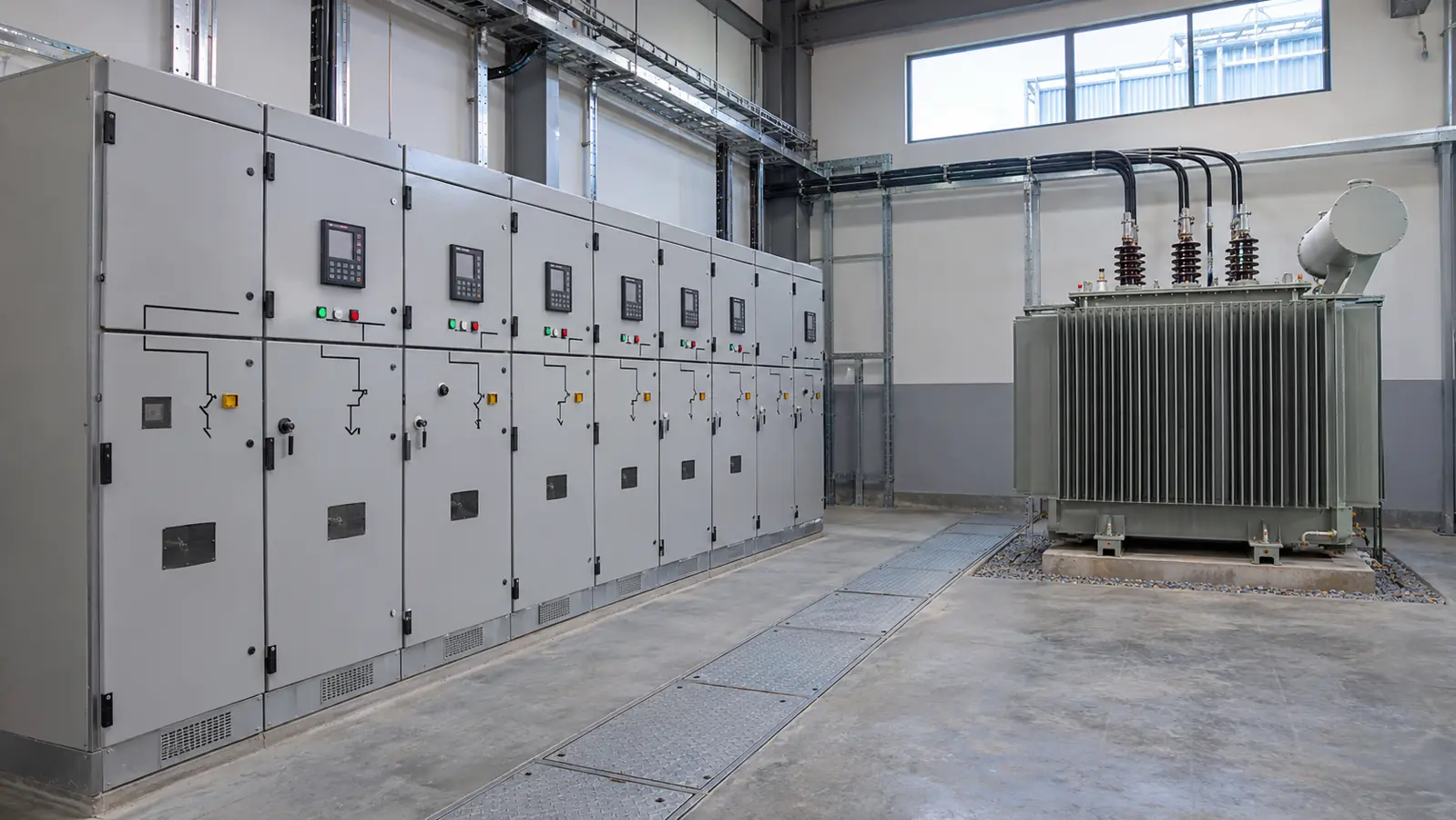
Running a transformer substation project
Who decides what, when and with whom: this guide follows a transformer substation project as the client experiences it, from the first power estimate to the handover of the documentation.
Read the guide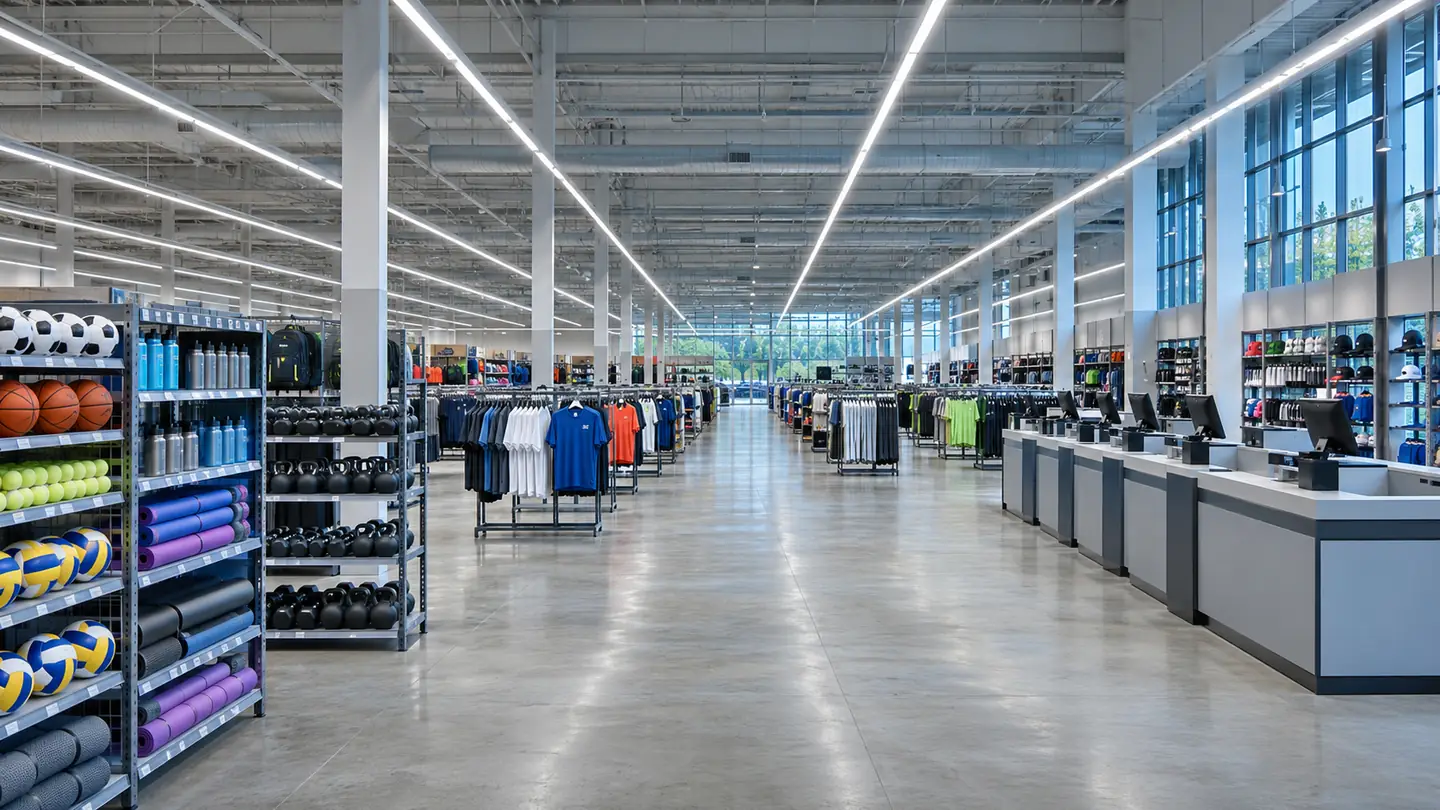
A store’s electrical work package: the checklist
In All Africa (IN2A) has delivered the electrical work package of several Decathlon stores in Morocco. This checklist sets out, in the order of the project, what the person in charge of an opening has to decide, follow, check and keep.
Read the guide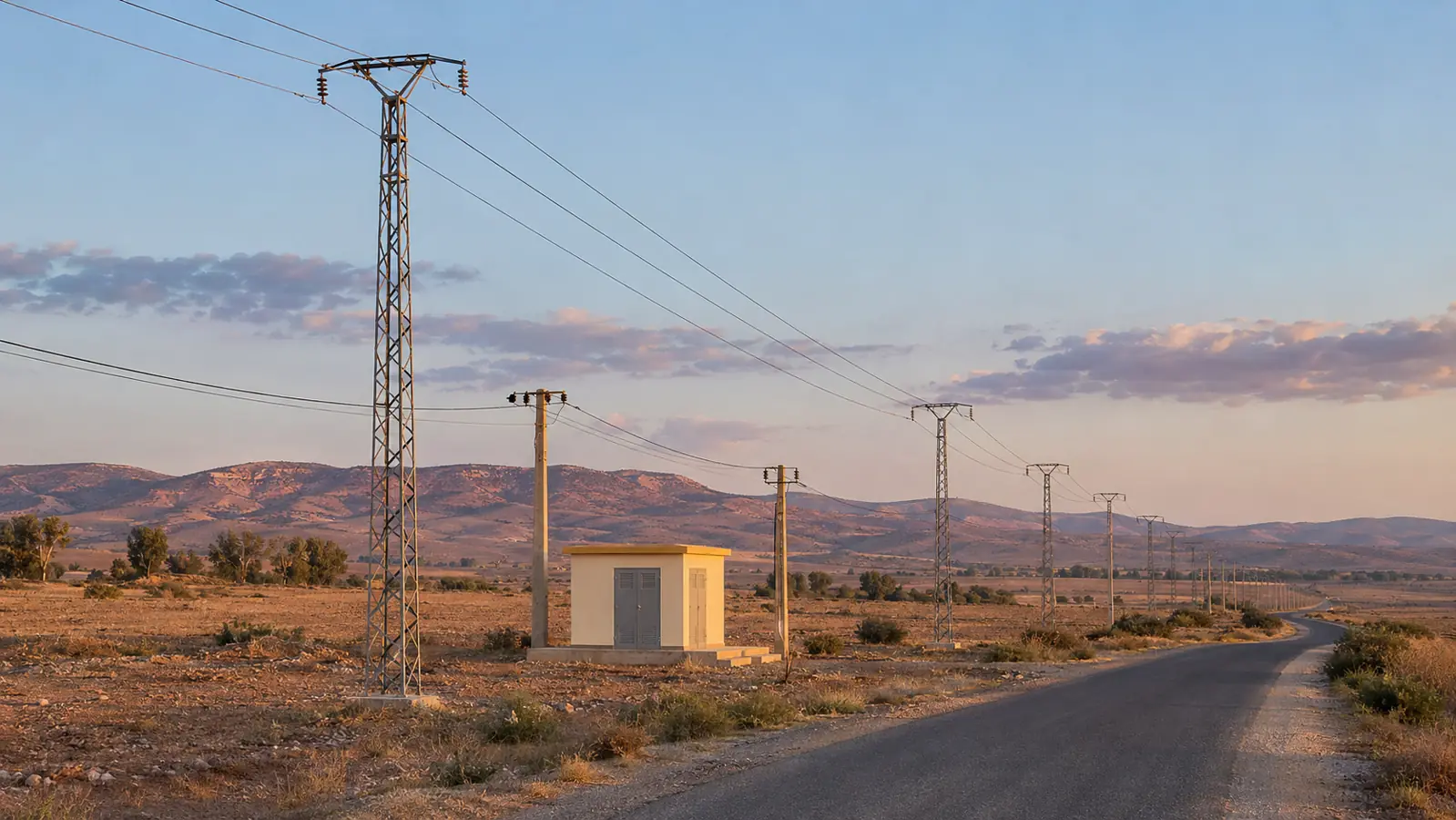
Choosing your electrical contractor
References, design, team, tests, maintenance: the questions to ask before entrusting an industrial or commercial project to an electrical contractor, and how to compare quotes that do not all cover the same thing.
Read the guideRelated services
The In All Africa (IN2A) trades linked to this subject.
A building to protect?
A work package to price, a substation to renovate, a home to equip: tell us what you need and we will get back to you.
- +212 522 212 298
- commercial@inallafrica.com
- 86, lot. Mandarouna, rue 23, Aïn Chock, Casablanca