
Choosing an electrical contractor for an industrial or commercial project.
References, design, team, tests, maintenance: the questions to ask before entrusting an industrial or commercial project to an electrical contractor, and how to compare quotes that do not all cover the same thing.
References that are comparable, and verifiable
A long list of clients does not prove much if none of the projects resembles yours. A reference is comparable when it combines the same kind of works, a building of the same type and the same constraints: a site in operation, medium voltage, a firm opening date. For each one, ask what the contractor actually carried out, for which client, and whether it was the main contractor or a subcontractor.
A reference can be checked. The certificate issued by the client at the end of the works is the simplest document to ask for; a call to the project owner completes it. At In All Africa (IN2A), the references point to specific works, for example the electrical and light fittings work package of the OFPPT institute and boarding school in Tafraout (client certificate dated 2017), or the electrical connection of an ONP unit at the port of M’diq (client certificate dated 2014).
What to ask for each reference
- The exact nature of the works carried out
- The client and the location of the project
- The contractor’s role: main contractor or subcontractor
- The client’s certificate, when there is one
- A person to contact at the client’s
Who designs, who builds, who will be on site
Between the company that signs and the people who do the wiring, there may be several intermediaries. Ask who produces the design calculations and the working drawings, in-house or at a third party, and who approves them. Ask also what share of the works will be subcontracted, and to whom. None of this is abnormal in itself; what is abnormal is finding it out once the works have started.
On site, quality depends a great deal on supervision. Who leads the team, and will that person be present throughout the works? Are the staff trained and authorised for the installations concerned, in particular at medium voltage? Does the contractor hold the qualifications required by the contract? Its size and its age count too: In All Africa (IN2A) has more than 25 staff and has been carrying out projects throughout Morocco since 2002.
Questions to ask
- Who produces the design calculations and the working drawings?
- What share of the works is subcontracted, and to whom?
- Who runs the site, and how often will that person be there?
- Are the staff authorised for the installations concerned?
- Does the contractor hold the qualifications required by the contract?
Tests, acceptance, documentation: the end of the works is prepared from the quote onwards
An electrical installation is judged at commissioning. Ask the contractor how it goes about it: which checks before energising, which operating tests, in whose presence, and in what form the results are recorded. A contractor used to these steps talks about them without hesitation and can show a sample report taken from a previous project.
The documentation handed over at the end is part of the service, just as the cables are. As-built drawings, diagrams, manuals, test reports: maintenance and any future extension depend on these documents. Check that they appear in the quote. Check also how the reservations raised at acceptance will be dealt with, and on what terms the contractor comes back if a fault appears after commissioning.
To have specified in the quote
- The checks planned before energising
- The operating tests and the people present
- The form of the test reports
- The content of the documentation handed over at acceptance
- How reservations and faults that appear later are dealt with
Reading an electrical quote
Two quotes are not compared by their total, but by their scope. One includes the design, the tests and the documentation; the other does not. One prices the civil works for the substation or the trenches; the other leaves them to a neighbouring work package. Before looking at the prices, set side by side what each quote includes and what it excludes: the price difference is often explained there.
Then look at the level of detail. A quote that names the equipment, its characteristics and its quantities can be checked and discussed. A single line for a whole package allows neither, and leaves open the question of additional works. Lastly, ask which documents the quote was based on: drawings, specification, site visit. A quote priced without them rests on assumptions that you need to know.
What a quote should show
- The scope: what is included and what is excluded
- The equipment, with its characteristics and quantities
- The design, the tests and the end-of-project documentation
- The boundaries with the other work packages: civil works, trenches, openings
- The documents on which the quote was based
- The completion time and what it depends on
- How additional works are priced
The warning signs, and the question of what comes after
Some signs should slow a decision down. A price far below the others, with no explanation about the scope. A quote submitted without a visit or a single question. References that the contractor cannot tie to any client who can be reached. No mention of the tests or of the end-of-project documentation. A completion time promised without taking account of the procurement of the equipment or of the formalities with the electricity distributor.
Lastly, think about what comes after. An industrial or commercial installation is maintained, repaired and extended; the contractor that built it knows it better than any other, provided that it also offers this service. That is the case of In All Africa (IN2A), which has, for example, provided general maintenance of a 630 kVA transformer substation for Laboratoires Sothema, in Casablanca.
A model of principle: typical equipment, not the mock-up of a particular installation.
Your questions
01Should you choose the cheapest quote?
Not before comparing the scopes. A cheaper quote may simply exclude the design, the tests, the documentation or part of the equipment. Once the quotes have been brought to the same content, the price becomes one criterion among others again, along with the references, the team proposed and the completion time.
02How can you check a reference put forward by a contractor?
Ask for the client’s certificate and the name of a contact, then call that person. Three questions are enough: which works did the contractor carry out, was the planned date met, and did it come back when a fault appeared? A contractor that is sure of its projects provides these contacts without difficulty.
03Is a site visit necessary before the quote?
On an existing site, yes. Drawings show neither the condition of the switchboards, nor the cable routes actually available, nor the access and shutdown constraints. A quote drawn up after a visit contains fewer assumptions, and therefore fewer additional works. For a new building, the drawings and the specification may be enough.
Read next
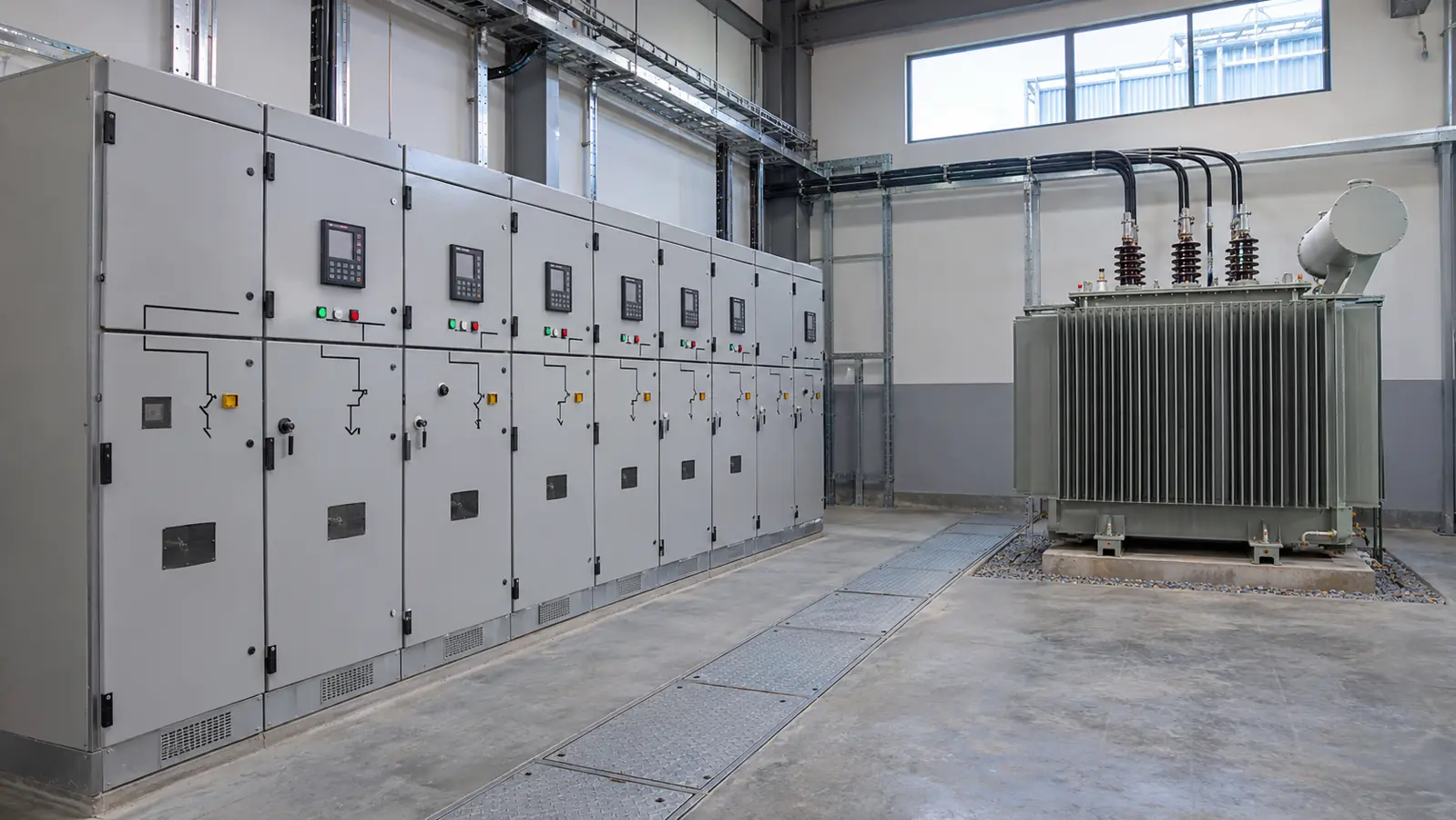
Running a transformer substation project
Who decides what, when and with whom: this guide follows a transformer substation project as the client experiences it, from the first power estimate to the handover of the documentation.
Read the guide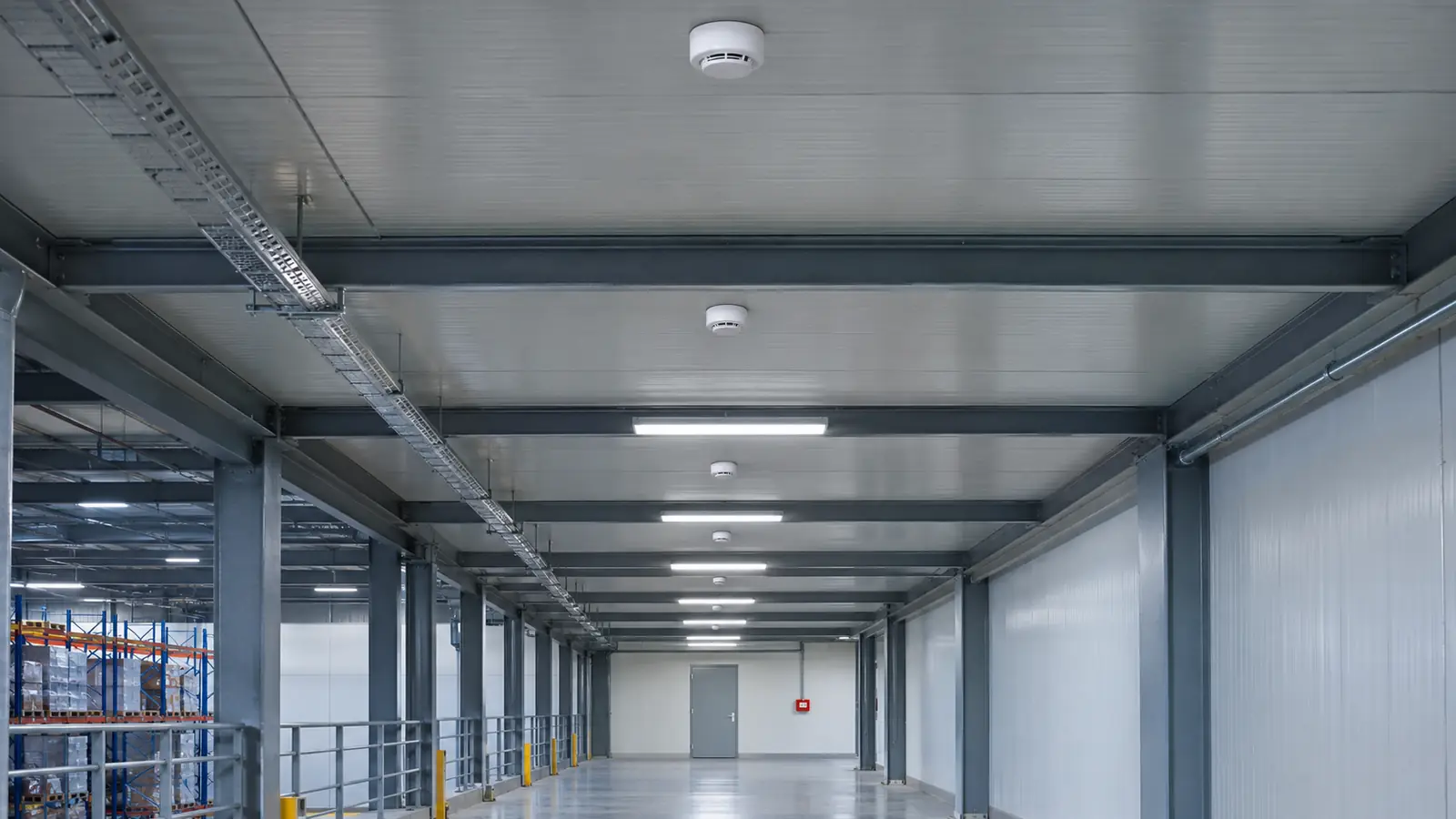
Understanding a fire safety system
Detection, alarm, safety actions: this guide explains to an owner or an operator what each part of the system does, what changes from one building to another and what to ask an installer.
Read the guide
A store’s electrical work package: the checklist
In All Africa (IN2A) has delivered the electrical work package of several Decathlon stores in Morocco. This checklist sets out, in the order of the project, what the person in charge of an opening has to decide, follow, check and keep.
Read the guideRelated services
The In All Africa (IN2A) trades linked to this subject.
A project to entrust?
A work package to price, a substation to renovate, a home to equip: tell us what you need and we will get back to you.
- +212 522 212 298
- commercial@inallafrica.com
- 86, lot. Mandarouna, rue 23, Aïn Chock, Casablanca